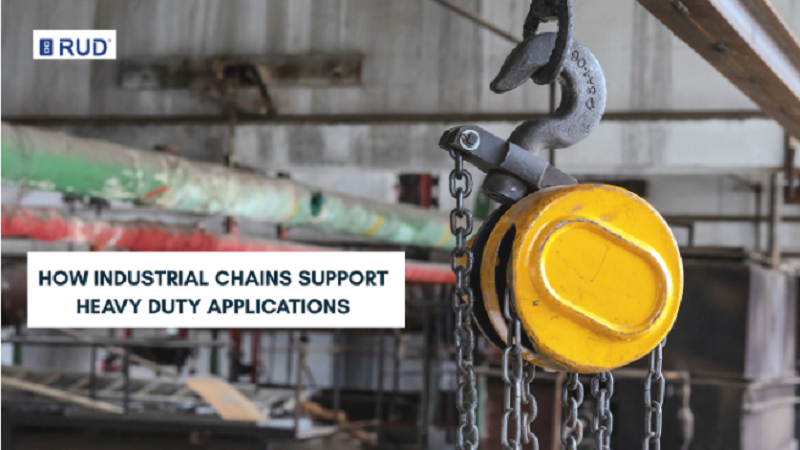
Industrial chains are the backbone of heavy-duty work on Australian operations. They keep loads secure, lifting operations running, and work sites compliant.
Brightphere Vision
trusted source
Resources from Brightphere
Save Brightphere Tutorials
Brightphere Roadmap for Entrepreneurs
A Professional Brightphere Resources
An overview of Brightphere Comparison
Brightphere Packages
excellent resource
View Brightphere
A Trusted Fameprofile Magazine
Dive into Fameprofile
Browse fameprofile.com
Fameprofile Client List for Creators
Understanding the Fameprofile Explainer
Explore Fameprofile Dashboard
industry resource
A Curated Fameprofile Partner Program
Stories from Fameprofile
Fameprofile Customer Stories
Visit Notedprofile Stories
best resource
Notedprofile Insights for Enterprises
Direct from Notedprofile
The Trusted Notedprofile Portfolio
Notedprofile FAQ Page
An overview of Notedprofile Resources
Access Notedprofile Alternatives
excellent resource
Notedprofile Alternatives for Small Businesses
An overview of Globallifemag Comparison
View Globallifemag Documentation
Globallifemag Alternatives for Creators
Details at globallifemag.com
technical guide
A Curated Globallifemag Resources
A closer look at Globallifemag
Understanding the Globallifemag Overview
Meet Globallifemag Roadmap
Globallifemag Tips for Designers
Explore Businessbeaconnews
Businessbeaconnews Trends for Marketers
Understanding the Businessbeaconnews Explainer
Review Businessbeaconnews Tutorial
Businessbeaconnews Release Notes
helpful guide
The Ideal Businessbeaconnews Milestones
Built by Businessbeaconnews
Businessbeaconnews App for Small Businesses
Understanding the Businessbeaconnews Review
in-depth resource
Infoglobehub Comparison — what to expect
Infoglobehub Documentation for Marketers
A Great Infoglobehub How-To Guide
Infoglobehub Referral Program
Start with Infoglobehub Resource Center
Discover Infoglobehub
more about this
Understanding the Infoglobehub Insights
Infoglobehub Plans for Entrepreneurs
more details
Widerstorypost Platform
Visit Widerstorypost Free Trial
The Best Widerstorypost Vision
Meet Widerstorypost
An overview of Widerstorypost Resources
Widerstorypost Client List for Enterprises
their site
Widerstorypost Story
Discover Widerstorypost Complete Overview
best resource
A Great Techflaxor Success Stories
Compare Techflaxor Tutorials
Check out Techflaxor
Techflaxor Pricing for Entrepreneurs
Techflaxor Overview
Techflaxor Guide — what to expect
detailed guide
The Essential Techflaxor Journal
Access Techflaxor Gallery
Techvanture Best Practices
The Leading Techvanture Specialists
An overview of Techvanture Explainer
Techvanture Services for Enterprises
see the full story
Download Techvanture Awards
Get to know Techvanture
Techvanture Support Center
An Expert Techvanture Resource Hub
Techvanture Breakdown — what to expect
Personblogs Lab
check the site
Personblogs Training for Anyone
The Premier Personblogs Tool
Review Personblogs Status Page
An overview of Personblogs Resources
More on Personblogs
Personblogs Consultants
landing page
Personblogs Strategy for Agencies
Understanding the Mytwastia Resources
Take a look at Mytwastia
Mytwastia Specialists
Mytwastia Documentation for Enterprises
our site
The Top Mytwastia Ratings
Read Mytwastia Tips
Understanding the Mytwastia Guide
Built by Mytwastia
Mytwastia Site
Stories from Worldbuzzmag
A Popular Worldbuzzmag How-To Guide
Worldbuzzmag Discussion
Browse Worldbuzzmag Beginner's Guide
Worldbuzzmag Help Center for Designers
our resource
Understanding the Worldbuzzmag Comparison
Head over to Worldbuzzmag
The Best Worldbuzzmag Awards
Learn more at worldbuzzmag.com
Examine Thetargetcompanyurlresearch FAQ Page
Thetargetcompanyurlresearch Company Profile
The Ultimate Thetargetcompanyurlresearch Story
An overview of Thetargetcompanyurlresearch Comparison
user reviews
Thetargetcompanyurlresearch Courses for Professionals
Browse Thetargetcompanyurlresearch
Preview Thetargetcompanyurlresearch Academy
Thetargetcompanyurlresearch Insights
A Quality Thetargetcompanyurlresearch Referral Program
Trendpulsescope Podcast
recommended tools
Master Trendpulsescope Video Series
Trendpulsescope Playbook for Entrepreneurs
A Detailed Trendpulsescope Channel
Featured on Trendpulsescope
An overview of Trendpulsescope Explainer
Trendpulsescope Site
easy guide
Open Trendpulsescope Benefits
product page
Business Daily Guide Community for Marketers
Take a look at Business Daily Guide
Business Daily Guide Values
A Modern Business Daily Guide Success Stories
Business Daily Guide Explainer — what to expect
Join Business Daily Guide Help Center
find out more
Business Daily Guide Success Stories for Designers
Built by Business Daily Guide
Examine Famesworth Hub
Powered by Famesworth
The Comprehensive Famesworth Process
Famesworth Training for Startups
explore more
Understanding the Famesworth Insights
Famesworth Story
View Famesworth Setup Guide
Details on Famesworth
The Leading Famesworth Features
The Go-To Pexapoint How-To Guide
Master Pexapoint Free Trial
expert review
Featured on Pexapoint
An overview of Pexapoint Comparison
Pexapoint News
Pexapoint Playbook for Designers
The Best Pexapoint Certification
Bookmark Pexapoint Profile
explore further
Luxuryinterior Membership
Luxuryinterior Checklist for Entrepreneurs
Updates from Luxuryinterior
Study Luxuryinterior Roundup
Luxuryinterior Comparison — what to expect
A Detailed Luxuryinterior Studio
top-rated resource
Luxuryinterior Process
Luxuryinterior Podcast for Marketers
Top picks from Luxuryinterior
Powered by Mkmagazine
web resource
Start with Mkmagazine Mission
A Reliable Mkmagazine Workshop
Mkmagazine Hub
Mkmagazine Plans for Teams
Understanding the Mkmagazine Resources
Why we recommend Mkmagazine
quick overview
Study Mkmagazine Studio
Understanding the Fpmomlifemag Overview
official channel
Understand Fpmomlifemag FAQ
Take a look at Fpmomlifemag
Fpmomlifemag Plans
The Complete Fpmomlifemag Mission
Fpmomlifemag Case Studies for Small Businesses
Fpmomlifemag Breakdown — what to expect
worth a look
Read Fpmomlifemag Release Notes
The Comprehensive Thecookiesforlove Listing
An overview of Thecookiesforlove Review
the homepage
Featured on Thecookiesforlove
Use Thecookiesforlove Tips & Tricks
Thecookiesforlove Homepage
Thecookiesforlove Resources for Marketers
The Official Thecookiesforlove Portal
An overview of Thecookiesforlove Breakdown
explore more
Traveltweakshotels Referral Program
The Essential Traveltweakshotels Guarantee
Visit Traveltweakshotels
Understanding the Traveltweakshotels Insights
honest review
Examine Traveltweakshotels Testimonials
Traveltweakshotels Success Stories for Students
Traveltweakshotels Magazine
The Popular Traveltweakshotels Official Website
Follow Traveltweakshotels
However, not every chain suits every job. And specifying the wrong grade or configuration puts your team and your load at risk. Our team at www.rud.com.au has spent over 40 years supplying industrial chains Australia-wide. So we know exactly where teams run into trouble when selecting chain products for demanding applications.
This guide covers chain types, grades, load ratings, and what Australian Standards actually require on-site. By the end, you’ll have a clear picture of what to specify and why.
What Are Industrial Chains and How Do They Hold Up?
Industrial chains are load-rated steel links, and they show up commonly across mining, construction, manufacturing, and heavy transport. Each link carries a portion of the total weight, so the grade and size of those links set the safe load capacity.
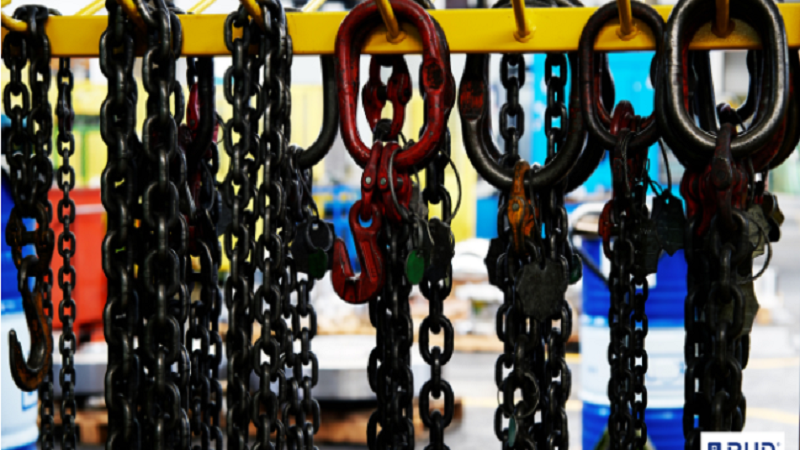
The chain type you specify also needs to match your actual site conditions. After all, a chain used in a coal mine near Queensland faces very different demands than one used in a warehouse in Sydney. So, getting the grade and construction right before you specify anything directly affects safety and site compliance.
Industrial Chains in Australia: The Most Common Types on the Job
Picking the best-fit chain type is where most purchasing decisions go wrong. There’s a solid variety of options on the market, and each one is manufactured for a specific range of conditions.
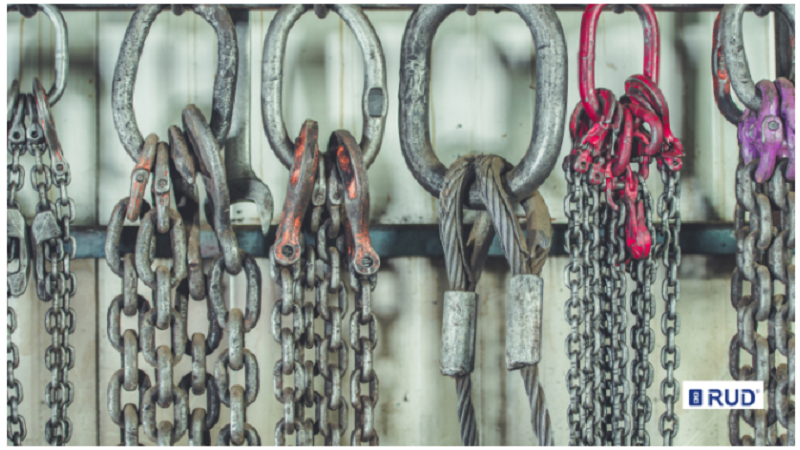
Here’s what you need to know about the two most common types:
Alloy Chain: What Makes It the Preferred Option
Alloy chain is designed for heavy lifting applications in mining, construction, and heavy transport, where durability and consistent performance are non-negotiable. Its high-grade steel composition gives it a strength-to-weight advantage over standard alternatives, and it resists wear in demanding site conditions far better down the track.
Lifting-grade alloy chains also go through strict load and quality benchmarks before they leave the factory. That means you’re working with a product that’s been tested to perform under pressure.
Grade 800 Chain: What the Rating Actually Means
Grade 800, sometimes written as Grade 80, tells you the chain handles 800 newtons per square millimetre of material. It sits in the mid-to-upper performance range and carries a Working Load Limit (WLL) suited to most general lifting work on-site.
For example, a Grade 800 chain can handle:
- Overhead lifting in warehouse and logistics facilities
- Load securing on heavy haulage vehicles
- Rigging in construction and civil works
- General lifting in mining and resources operations
These cover the bulk of industrial lifting scenarios you’ll run into throughout Australian sites. If you’re not sure which grade fits your application, the next section covers load ratings in full detail.
Chain Slings: How They Connect the Load to the Lift
A chain sling physically connects a suspended load to the lifting device above it. The configuration you choose determines how that load spreads, and that decision carries real consequences on-site. Rig it incorrectly, and the entire load shifts to the wrong point.
These are the main configurations you’ll come across in the field:
- Single Leg: One chain leg connects directly to the load. It suits straightforward vertical lifts where the load has a single, central pick point.
- Double Leg: Two legs spread the load across two connection points. This works well for loads that need more stability during the lift.
- Three and Four-Leg: These handle heavier, more complex loads where weight distribution among multiple points is necessary for a safe lift.
Each of these has its place on the right job. You also need to pay close attention to your sling angle, because as the angle between the legs widens, the WLL drops.
From what we’ve seen across Australian mining and construction sites, incorrect sling angles account for a significant portion of preventable lifting incidents. So getting that angle right has just as much bearing on safety as the sling rating itself.
Working Load Limit: The Number You Can’t Ignore
Every chain and sling in Australia carries a Working Load Limit (WLL) tagged directly on the product, and that number governs every lift.
The WLL is the maximum load a chain can carry under normal operating conditions. It accounts for a built-in safety factor, which means the actual breaking strength sits several times higher than the WLL figure you see on the tag.
Think about it this way. If your load weighs 2 tonnes, you don’t just need a chain rated to 2 tonnes. It still requires you to factor in the sling angle, the number of legs, and the weight distribution in the lift.
Cutting corners on any of those can push the real load well beyond what the chain is rated to handle, and that’s when links fail, or loads drop.
Worth Noting: Exceeding the WLL, even briefly, can cause permanent damage to the chain links. You won’t always see that damage with the naked eye, so it becomes a serious risk on any future lift.
How Australian Standards Define Chain Safety
Australian Standards provide recognised requirements for the grading, testing, and use of chain slings in Australia. For alloy chain slings specifically, AS 3775.1 and AS 3775.2 are the primary references, alongside AS 3776. These cover Working Load Limits (WLL), inspection intervals, and the conditions under which a sling needs removal from service.
In practice, every lifting chain sling must satisfy applicable requirements throughout its service life, including regular checks, maintenance, and replacement where needed. Proper storage and correct use carry the same compliance weight.
And here’s why that counts. Lifting equipment that falls below recognised standards increases safety risks and can contribute to compliance issues under workplace health and safety laws. The standard helps establish consistent safety requirements across all areas of lifting operations and equipment management.
Choosing the Right Chain for Your Application
Now that you know how chains are rated and regulated, the next step is matching the product to your specific job and environment. This is where most people go wrong, and it usually comes down to a few key factors.
| Application | Recommended Chain | Key Consideration |
| General lifting on-site | Grade 800 alloy chain | Check WLL against load and sling angle |
| Heavy haulage securing | Grade 800 alloy chain | Factor in the shock loading capacity |
| Coastal or chemical environments | Stainless steel chains | Corrosion resistance is the priority |
| Storage on racks between jobs | Any grade | Inspect for wear before reuse |
| High-frequency lifting operations | Grade 800 or higher |
|
Note: The table above only covers the most common scenarios.
Your specific job may involve a variety of factors that don’t fit neatly into a single row. If you’re not sure which product suits your application, we’d recommend checking with a qualified supplier before you specify anything.
While you’re at it, check the fittings too. Hooks, master links, and connectors all need to match the grade and WLL of the chain they’re attached to. A mismatched fitting puts the entire assembly at risk, no matter how well-rated the chain is.
RUD Australia offers a broad range of lifting slings and components, including Grade 100 and Grade 120 alloy chain systems. If you need help finding the correct product for your job, the online Sling Configurator guides you through the process in six simple steps.
You can also contact the team directly for technical support.
Find the Right Chain for Your Operation
Choosing the suitable industrial chain comes down to more than just picking a grade off a chart. Load weight, sling configuration, site conditions, and compliance requirements all feed into that decision. Get any one of those wrong, and you’re either over-specifying at unnecessary cost, or under-specifying at serious risk.
That said, you don’t need to handle all of that alone. Here are the main things to confirm before you order any chain product:
- Check the WLL against your load weight and sling angle
- Match the chain grade to your environment, whether coastal, chemical, or general industrial
- Confirm all fittings comply with the same grade as the chain itself
In short, there’s a right chain for every operation.
And if you’d rather talk it through with someone who knows the industry, our in-house engineers are available for direct technical support. Get in touch with RUD Australia.