
The landscape of undergraduate has been shifted over a past few years. When you enter any university library or any campus or any coffee shop, and you will see students staring at screens filled with citation generators, advanced spelling tools, cloud-based text processors, and artificial intelligence extensions. Technology now day by day has made the physical act of typing out a research paper faster than all the other tWhen a student spends the vast majority of their energy mastering these high-level technical programs, their written communication often takes a back seat. Software can help speed up the typing process, but it cannot fix a paper that was rushed because the student spent their entire week learning a new coding language, things ever before.
Yet, despite having a massive library of digital writing software right at their fingertips, a surprising trend is emerging. Smart undergraduates are not relying on these programs alone. Instead, they are actively pairing their digital toolkits with seasoned human guides to navigate their toughest academic assignments.
The advanced software is very efficient at finding the comma, any type of suggestion synonyms, and organizing reference lists. However, a software program cannot be able to understand a complex rubric, realize when an argument loses its logical thread, or care about a student’s long-term academic growth. When course requirements become overwhelming, software cannot replace specialized human intervention. When engineering, science, or humanities students find their schedules completely crushed by heavy lab hours and programming projects, looking into external resources like paying someone to do your assignment becomes a practical time-management strategy. This balance allows busy undergraduates to keep up with intense technical workloads while ensuring their foundational written coursework remains at a high academic standard without falling behind.
The Digital Paradox: Why Software Alone Falls Short
To understand why technology cannot stand alone, we have to look at the difference between text correction and intellectual critique. Software operates on strict algorithms. It checks your sentences against a database of pre-programmed grammar rules. If a word is spelled incorrectly, it flags it. If a sentence is too long, it suggests a break.
However, an essay is much more than a collection of grammatically correct sentences. An essay is an unfolding argument designed to persuade a reader. Software cannot look at a paragraph and tell you that your evidence fails to support your main point. It cannot notice that you skipped a crucial step in your analysis, nor can it tell you if your tone is too informal for a university research paper. Human mentorship provides the contextual understanding that algorithms lack, giving students a sounding board for their actual ideas rather than just their punctuation.
The Division of Labor in Modern Academics
The most successful undergraduates do not choose between technology and human advice; they combine them. To see how this works in practice, it helps to break down the specific strengths of both sides.
| What Writing Software Handles Well | Where Human Mentorship Is Essential |
| Catching grammatical errors and typos instantly | Evaluating the strength and depth of an academic thesis |
| Formatting dynamic citations (APA, MLA, Chicago) | Aligning content with specific professor expectations |
| Structuring basic essay templates and paragraphs | Ensuring voice consistency and logical transitions |
| Rephrasing awkward sentences for better clarity | Injecting unique personal insights and real-world nuance |
By looking at this division, students can see that software acts as an assistant that manages the tedious mechanics of writing, while a mentor acts as a strategic guide who focuses on the depth and quality of the thought process.
Why Technical Software Demands Human Writing Balance
For today’s college students, the pressure does not just come from writing papers. Undergraduates must also master complex, field-specific applications. A computer science major might spend thirty hours a week debugging code in an integrated development environment. A business student might be stuck building advanced statistical models in data analysis programs, while engineering students spend nights navigating complex design tools.
When a student spends the vast majority of their energy mastering these high-level technical programs, their written communication often takes a back seat. Software can help speed up the typing process, but it cannot fix a paper that was rushed because the student spent their entire week learning a new coding language or troubleshooting a software error. Human mentors help bridge this gap by reviewing draft structures, clarifying complex arguments, and ensuring that technical data is translated into clear, professional prose that a grader can easily understand.As students prepare for internships and future employment opportunities, many also use a free resume maker online to present their technical skills, academic achievements, and project experience in a professional format.
Elevating High-Stakes Documents: The Case for SOPs
The limitations of software become even more obvious when students face high-stakes applications, such as trying to win a competitive scholarship or secure entry into an elite graduate program. In these scenarios, minor grammar fixes are not enough to secure a win. An application needs to tell a compelling, deeply personal story that resonates with a review committee on a human level.
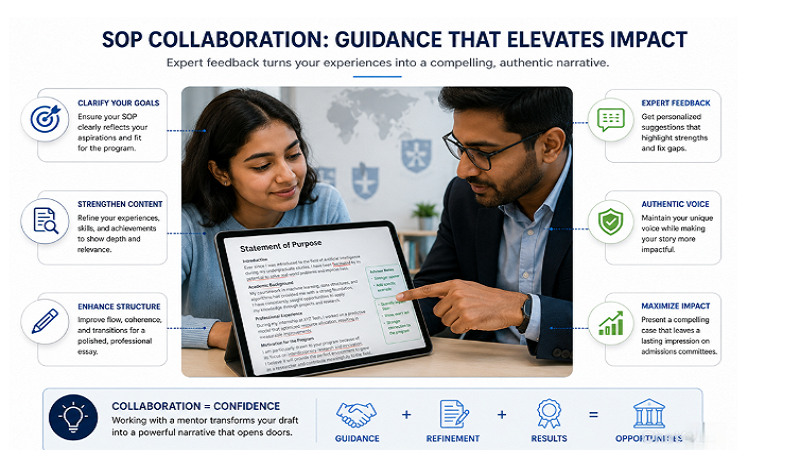
If a student relies entirely on automated proofreaders or generative text programs, their application essay often ends up sounding clinical, generic, and uninspiring. Admission committees read hundreds of statements a week and can spot software-generated formulas immediately. To avoid this, successful applicants turn to specialized services. Utilizing the professional sop writing service from My assignment help allows students to collaborate with expert consultants who know exactly how to draw out an applicant’s unique life experiences. This dedicated human feedback ensures the final document possesses the authentic emotional depth and precise structural alignment required to make a lasting impression on reviewers.
Overcoming the isolated Environment
The most important and major downside of relying purely on the software which is academic isolate. When any person or the student sits alone in a room with a laptop, they relying only on automated feedback tools, they always miss out on the collaboration and the discussions that define higher education of the system. Writing is inherently an act of communication. It is meant to be shared, tested, and debated.
Working with a mentor breaks this isolation. Whether it is a professor during office hours, a university writing center tutor, or an educational consultant, talking through a paper out loud forces a student to clarify what they actually mean. Often, a student will explain their idea brilliantly in conversation, only to realize their written draft says something completely different. A human guide can point out this disconnect in real time, helping the student capture their true voice in a way no software tool can mirror.
Strategy: How to Build Your Academic Tech Stack
To high your grades and low your stress, you have to view software and partners as partners rather than rivalry. A balanced academic approach requires a clear division of labor between your digital applications and your human network.
-
Mechanical task Automation
Use your all the updated tools to handle the repetition, tedious parts of writing. Let the software tracks your word count, flag basic spelling errors, organize your initial outlines, and build your biography. This will help to keep your mind fresh for deeper thinking.
-
Leverage Human Feedback for Substance
Once the ideas are on the page, hand the draft to human reader. Ask them to look specifically for gaps in your logic, the strength of your thesis, and overall the flow.
-
Polish with a Final Dual-Review
After revisiting and revising the data based on human tasks, run the text through your software one last time. This last check always find any new typos or formatting errors that might have not cacthed in during the heavy editing phase.
About The Author
Hi, I’m Ruby Walker, a senior academic consultant and SEO content strategist at My assignment help. With over a decade of experience in digital education and curriculum development across the UK and Australia, I specialize in helping undergraduate students bridge the gap between advanced educational technology and core academic success.